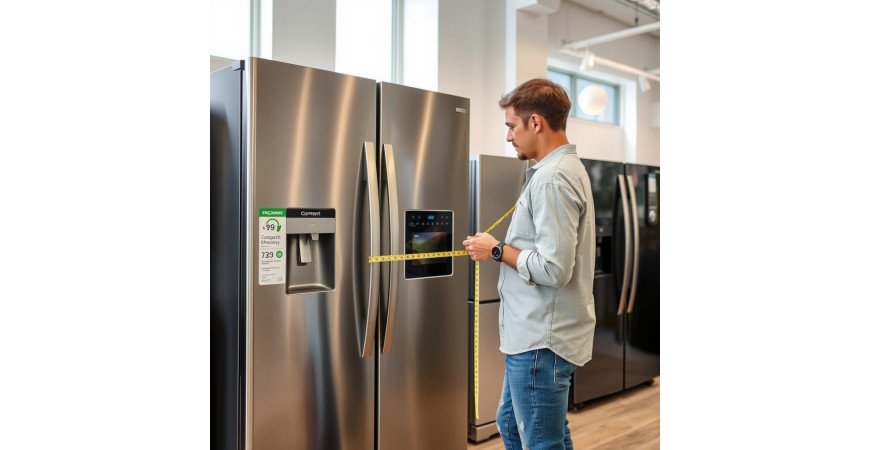
How to Choose a Refrigerator Without Overspending
Buying a refrigerator is a decision that will affect you for several years, so rushing into it can lead to unnecessary expenses. An overly large model will cost more and use more electricity, while features you never use will raise the price without offering any real benefit. To figure out how to choose a refrigerator wisely, start not with a list of popular models, but with your own needs and the amount you are willing to spend.
Choosing a refrigerator will be easier if you set some boundaries in advance: the capacity you need, the space available in your kitchen, and the operating costs you can accept. This way, you can compare models based on the features that matter to you instead of paying extra for specifications that sound good in ads but make no difference in everyday use.
Start with Your Actual Needs
Before choosing a refrigerator for your home, consider your family’s habits. How many people will use the appliance? How often do you shop for groceries, and do you prepare meals several days in advance? The answers will help you determine what capacity will be practical. There is no need to buy the largest household refrigerator just to have extra room: unused space in the compartments does not always justify the higher price and additional electricity consumption.
Likewise, take a careful look at special modes, touch panels, internet connectivity, and other extra features. If they do not meet your everyday needs, a basic model may be a better-value choice. This does not mean that modern features are unnecessary for everyone: what matters is paying for what you will actually use.
Consider More Than Just the Price Tag
You cannot answer the question “which refrigerator should I buy” by looking only at its price in the store. When comparing models, consider the energy-efficiency rating, expected electricity consumption, warranty terms, and availability of service. A cheaper model will not necessarily be a better deal if it costs more to run or is difficult to repair.
It is useful to compare several options within your budget and check the total cost of buying a refrigerator: delivery, carrying it upstairs, installation, and removal of your old appliance, if you need these services. Confirm these terms before paying to avoid unexpected extra charges. Also check exactly what the warranty covers and where to go if something goes wrong.
What to Look for When Choosing a Refrigerator
When deciding what to look for when choosing a refrigerator, separate essential features from nice-to-haves. Essential features include suitable dimensions, sufficient usable capacity, convenient compartment layout, and the ability to install the appliance in the space available. You can consider extra modes, design, or a particular type of controls afterward. This approach helps you avoid getting distracted by flashy features if a model does not meet your basic requirements.
- Set a budget: leave room for delivery and related services.
- Estimate the required capacity: base your choice on the number of users and your usual stock levels.
- Compare costs over time: review energy consumption data and warranty terms.
- Rule out unnecessary options: choose features with clear practical benefits for your family.
Do not limit your search to one brand or store. Compare the specifications of several models, check whether a service center is available, and read the return policy. Reviews can give you an idea of how an appliance performs in everyday use, but they should be considered alongside official specifications, not as your only source of information. If a seller offers a substantial discount, check whether the item is a display model or a model with a different set of included accessories.
Home refrigeration equipment should suit the conditions of your particular home. Check in advance whether the doors will open conveniently and whether the appliance can be brought into the kitchen without obstruction. These simple steps will help you avoid costs resulting from a poor choice or the need for an exchange.
So, to figure out how to choose a refrigerator without unnecessary expenses, first determine the size and budget you need, then compare models based on practical specifications and the total cost of ownership. This approach helps you make an informed decision: you will not pay for excessive capacity or unused features, but you will not sacrifice convenience for the lowest price either.

A step-by-step guide to choosing a refrigerator for your home
To figure out how to choose a refrigerator and avoid getting overwhelmed by dozens of models, proceed step by step: from checking the conditions in your home to comparing specific features. This approach to choosing a refrigerator will help you assess not only the appliance’s appearance but also how convenient it will be to use every day. Below is a practical guide you can follow before choosing a refrigerator for your home.
-
Measure the installation space
Measure the alcove or kitchen area: its width, height, and depth. Separately check whether the baseboard, windowsill, adjacent cabinets, or pipes will get in the way. For a built-in model, refer to the alcove dimensions and the manufacturer’s installation requirements; for a freestanding model, use the dimensions of the appliance itself.
Leave the ventilation gaps specified in the instructions. Also make sure the doors can open fully and the shelves and drawers can be pulled out without obstruction. If the kitchen is narrow, plan the door opening direction in advance and check whether the doors can be reversed.
-
Check the delivery route to the kitchen
Measure doorways, hallways, stairwells, and the elevator. A large household refrigerator must not only fit in the kitchen, but also be safely brought to the installation site. Ask the seller whether the model you choose can be transported in a particular position and whether the doors or handles need to be removed.
Before placing your order, arrange for delivery inside, unpacking, and carrying the appliance upstairs. This is especially important if you are considering a wide model or refrigeration equipment with a non-standard configuration.
-
Choose the format and layout you need
Compare single-compartment and two-compartment options, models with a top- or bottom-mounted freezer, and Side-by-Side designs. Consider which foods you reach for most often: if you use the freezer every day, its location and the convenience of the drawers will be important; if you mainly store fresh food, pay attention to how accessible the refrigerator compartment is.
Look at the interior layout: the number of shelves, the spacing between them, the material of the door bins, and whether there is a produce compartment. Adjustable shelves make it easier to store tall bottles and large pots. Everyday convenience often helps you decide which refrigerator to buy better than a long list of extra features does.
-
Find out which modes you really need
Check for automatic defrosting, quick cooling or freezing, vacation mode, and an open-door alert. Don’t choose a feature just because it appears in the description: find out exactly how to activate it and when it will be useful.
If the model has a water dispenser or ice maker, check whether it needs to be connected to a water supply and whether it requires a filter and regular maintenance. It’s useful to review the manual or a demonstration of the controls to see whether the settings panel will be easy for everyone in the family to use.
-
Compare noise levels and controls
Look up the stated noise level in the specifications and compare it with those of other models. This can be especially important if your kitchen is open to the living room or a bedroom is nearby. If possible, listen to the appliance operating in the store, but keep in mind that demonstration conditions may differ from those at home.
Pay attention to the type of controls, display readability, and how accessible the settings are. Check whether it’s easy to change the temperature, switch on the mode you need, and understand the indicator messages. What to look for when choosing a refrigerator depends on your habits: some people prefer a simple mechanical system, while others want precise electronic controls.
-
Assess the materials and build quality
Inspect the body, doors, handles, seals, and interior surfaces. The doors should close evenly without being misaligned, and the seal should fit snugly around the entire perimeter. Check whether the shelves and bins are easy to remove for cleaning and whether there are any sharp edges or loose parts.
Find out how to care for the exterior finish: some surfaces show fingerprints more easily and need to be wiped down more often. If you choose a model with touch controls, check that they are conveniently positioned and protected against accidental presses.
-
Check the warranty and service options
Before buying, read the warranty terms: its duration, the faults it covers, and how to make a claim. Find out where the authorized service centers are located and whether service is available in your area. Keep the receipt, warranty documents, and manual.
Make sure you can buy the necessary accessories or replacement parts for the model you choose. This will make future repairs easier and help you avoid long waits for parts.
-
Compare the specifications and place your order
Choose several models that fit your measurements and requirements, then compare their layouts, noise levels, modes, warranties, and ease of maintenance. Don’t rely only on the short product listing: check the full specifications on the manufacturer’s website and read the manual if it is available.
Before paying, confirm exactly what is included in the price, whether delivery and installation are available, and what return policy the seller offers. This will make buying a refrigerator more predictable, and your answer to the question of which refrigerator to buy will be based on verified facts rather than advertising alone.
Quick pre-purchase checklist
- The installation space and delivery route have been measured.
- The doors can open, and the drawers and shelves can be pulled out.
- The format and interior layout suit your habits.
- The necessary modes are clear, and extra features do not affect the decision.
- Noise level, materials, warranty, and service have been checked.
- Delivery, connection, and return terms have been clarified before payment.
This systematic approach makes choosing a refrigerator clearer and helps you assess a model under real-world conditions. When every item is checked in advance, it is easier to find an appliance that suits your kitchen, meets your household needs, and is easy to maintain.

Comparing refrigerator types and features
Once you understand your basic requirements, it is time to compare the appliance’s design and capabilities. This is where the question of how to choose a refrigerator to suit your family’s habits becomes practical: some people need simple food storage, while others want a large freezer, separate temperature zones, or automatic ice making. Below are the main options and the situations in which each is suitable.
Single-compartment or two-compartment
Single-compartment models have a refrigerator section, while the freezer may be absent or limited to a small internal compartment. This is a compact option for a cottage, office, guest room, or home where frozen food is rarely stored. This type of household refrigerator usually has a simpler design, but may not offer enough capacity for regular grocery shopping.
A two-compartment refrigerator has separate refrigerator and freezer sections. It is a versatile choice for most households: everyday foods go in the upper compartment, while supplies are kept in the lower or upper freezer. If you are comparing which refrigerator to buy for your family, consider not only the total capacity but also the ratio between the compartments. A model with a spacious freezer compartment is more convenient for those who like to store frozen vegetables, berries, and prepared foods.
Freezer on the bottom or top
A bottom freezer suits those who use the refrigerator compartment more often: everyday items are positioned at a more convenient height. Pull-out drawers help organize supplies by category, although you will need to bend down to reach items at the bottom.
A top-freezer refrigerator may be a better choice if frozen foods are used often or need to be accessed quickly without pulling out the lower drawers. In these models, the freezer compartment sometimes has shelves or a door rather than a full set of bins. The choice depends on which compartment your family uses more actively.
Classic, Side-by-Side, or French Door
A classic refrigerator with vertically arranged compartments is a practical option for everyday use. It takes up less width than multi-door designs, and its interior is usually easier to organize for a standard selection of groceries.
Side-by-Side has two tall door sections: a refrigerator and a freezer. This format is convenient for large stocks and a wide variety of foods, but requires enough space, particularly to open the doors fully. French Door combines a wide refrigerator compartment with two doors and freezer drawers at the bottom. It is useful when you need to conveniently store large dishes or containers, but the design may be more expensive and require more space. So, when deciding what to consider when choosing a refrigerator, compare not only capacity but also how you’ll access its contents.
No Frost, drip defrost, or a combined system
No Frost circulates air in the compartment, reducing frost buildup and the need for manual defrosting. This is convenient for busy people and for a freezer that is opened often. At the same time, foods should be stored in packaging or containers so they don’t lose moisture.
In models with a drip system, moisture on the back wall of the refrigerator compartment defrosts automatically, but the freezer usually needs to be defrosted manually from time to time. A combined solution uses different principles in separate compartments. It can be a good compromise if reducing maintenance is important, but you don’t need a fully automatic system in every compartment. When considering refrigeration equipment, check how each compartment works rather than relying only on the No Frost label.
Features: what’s really useful
A freshness zone maintains conditions that help keep certain types of food fresh for longer, such as meat, fish, vegetables, or herbs. It’s a good choice if you often buy fresh food and want to store it separately. Quick cooling is useful after loading a large amount into the compartment, while quick freezing is handy for seasonal berries or homemade preserves.
A water dispenser and ice maker add convenience, but take up space and can make the design more complex. They’re worth choosing if you regularly use chilled water or ice. Electronic controls, an open-door alarm, and vacation mode can also be useful, but their value depends on your habits. When comparing models, assess features by their actual usefulness, not by the number of items in the specifications.
| Option | When to choose it | What to consider |
|---|---|---|
| Single-compartment | For a small supply of food, a summer house, or an office | Limited freezer capacity or no freezer compartment |
| Two-compartment | For everyday family use | Check the size of each compartment and the freezer's location |
| Side-by-Side or French Door | For large supplies and a clear view of the contents | Sufficient space and clearance for opening the doors are needed |
| No Frost | When automatic moisture removal and less maintenance are important | Food should preferably be packed airtight |
| Drip system | For those willing to defrost the freezer periodically | Manual maintenance of the freezer compartment may be necessary |
Therefore, your choice of refrigerator should be based on how you actually use its compartments and features. If you rarely need a freezer, don't overpay for excessive capacity; if storing supplies is important, choose a design with thoughtfully arranged drawers and a suitable freezing system. To figure out how to choose a refrigerator for your home, compare several models using the same criteria: compartment types, defrosting system, shelf layout, and the modes you need. This approach will help you decide how to choose a refrigerator that will be convenient for your everyday life.
A simple explanation for your first purchase
If you are buying a refrigerator for the first time, you don't need to understand all the technical terms right away. Start with a simple question: what exactly will you store in it every day? One model may suit a person who mostly buys prepared food. Another may be more convenient for a family that cooks at home and freezes food. This approach will help you understand how to choose a refrigerator without unnecessary confusion.
Imagine that a refrigerator is a food cupboard with several compartments. The main compartment is intended for milk, vegetables, prepared dishes, and anything that needs to be kept chilled. The freezer is for meat, berries, ready-to-cook foods, and other items you want to keep for longer. Before buying, think about what you use more often: chilled food or frozen supplies.
Understand the main parts
Most models have shelves, door bins, and drawers. Shelves are intended for containers and dishes, while door bins are convenient for bottles, sauces, and small packages. The bottom drawers are often used for fruits and vegetables. Check whether they slide out easily, whether the shelf height can be adjusted, and whether your usual cooking pot will fit.
The freezer may be located at the top, bottom, or side. If you often take out frozen food, consider whether the door is easy to open and whether you can find what you need inside. For example, pull-out drawers help you organize supplies instead of having to search for a bag under other food. For your first refrigerator, this simple convenience can sometimes be more important than unusual extra features.
Check whether it will be easy to use
During your inspection, open the doors several times. Make sure the handle is comfortable, the doors don't hit the furniture, and the shelves are at a comfortable height. If you have children or shorter people at home, it's important that they can reach the main food items without difficulty. Also find out whether the doors can be reversed to open from the other side: this may come in handy if the kitchen furniture layout changes later.
Before choosing a refrigerator for your home, imagine an ordinary day: you come back from the store with bags, put away the milk, and take out ingredients for dinner. Will these tasks be convenient? If the answer is yes, the model is likely a good fit for your daily habits. If the shelves seem too narrow or the doors are awkward to open, it's better to check other options.
Ask the salesperson simple questions
Don't hesitate to ask them to explain the specifications in plain language. Instead of asking about a technical term, you can ask how often the appliance will need defrosting, whether the interior surfaces are difficult to clean, and how noticeable its noise is in a quiet room. Find out what the warranty covers, where to go if something goes wrong, and whether service is available in your city.
Be sure to clarify the delivery arrangements. A household refrigerator needs not only to be delivered, but also safely brought into your home. Let the store staff know about any stairs, narrow hallways, or elevators. When accepting the delivery, inspect the body and doors to spot any damage right away.
How to make the final decision
To decide which refrigerator to buy, make a short list of your requirements. For example: the doors open in the right direction, there are convenient drawers inside, the freezer is suitable for the food you store, and maintenance doesn't seem complicated. Then check which models meet this list. Don't choose an appliance based only on a photo: if possible, see it in person and open the main compartments.
What should you look for when choosing a refrigerator if you have no experience yet? Clear controls, a convenient interior layout, simple maintenance, and accessible service options. Not everyone needs professional refrigeration equipment with a large number of settings: for an ordinary kitchen, a model that handles everyday tasks well is usually enough.
Choosing a refrigerator becomes easier when you focus not on the number of buttons, but on how well the appliance fits your life. Write down your answers to a few questions: what you'll store, how often you'll use the freezer, whether it's convenient to reach the food, and whether the appliance will be easy to maintain. This preparation will make buying a refrigerator less stressful, and the new appliance truly useful for your home.

Експертна добірка порад і моделей
Коли основні вимоги вже визначені, залишається перейти від загального пошуку до короткого списку відповідних моделей. Саме на цьому етапі легко розгубитися між схожими характеристиками, рекламними обіцянками та різницею в ціні. Щоб зрозуміти, як обрати холодильник без сумнівів після покупки, оцінюйте не окрему гучну функцію, а те, наскільки вся модель відповідає вашому повсякденному ритму.
Як скласти короткий список
Замість того щоб переглядати десятки сторінок без конкретної мети, відберіть кілька моделей за обов’язковими параметрами. Спочатку перевірте, чи відповідає холодильник вашим вимогам до внутрішнього простору, оснащення та керування. Потім порівняйте гарантійні умови, доступність сервісного обслуговування та відгуки про роботу приладу після тривалого використання.
Як вибрати холодильник для дому серед варіантів, які на перший погляд майже не відрізняються? Порівнюйте їх за однаковими критеріями й занотовуйте результати. Такий підхід допоможе помітити важливі відмінності: чи зручно розташовані полиці, чи легко діставати продукти, чи зрозуміло налаштовується температура та чи є потрібна підтримка після купівлі.
- Внутрішня організація: перевірте, чи можна змінювати положення полиць і чи вистачає місця для високих ємностей.
- Керування: оцініть, наскільки просто встановлювати параметри та читати індикатори.
- Догляд: з’ясуйте, які поверхні легко очищати та чи зручно мити знімні елементи.
- Гарантія й сервіс: уточніть строк гарантії, порядок звернення та наявність авторизованих майстерень.
- Відгуки: шукайте повторювані спостереження власників, а не робіть висновок за одним коментарем.
Який холодильник купити: орієнтуйтеся на сценарії використання
Універсальної відповіді на запитання «який холодильник купити» немає: найкращий вибір залежить від того, як саме ви користуватиметеся приладом. Для тих, хто часто готує вдома, може бути важливим зручний доступ до свіжих продуктів і гнучке налаштування простору. Якщо ж холодильник використовують нерегулярно, перевагою стане просте керування без складних меню та зайвих режимів.
Розглядаючи побутовий холодильник, не сприймайте додаткові функції як обов’язкову перевагу. Диспенсер, спеціальні зони чи автоматичні режими мають сенс тоді, коли ви справді користуватиметеся ними. Інакше вони можуть збільшити вартість, але не зробити щоденне користування зручнішим. Вибір холодильника стає простішим, якщо кожну опцію перевіряти запитанням: «Яку конкретну задачу вона розв’язує в моєму домі?»
На що звернути увагу при виборі холодильника перед замовленням
Перед оформленням покупки звірте характеристики саме тієї модифікації, яку збираєтеся замовити. У межах однієї серії можуть відрізнятися оснащення, колір, комплектація або тип керування. Не обмежуйтеся загальним описом товарної лінійки: відкрийте картку конкретної моделі, перегляньте інструкцію виробника й перевірте, що входить до комплекту.
What should you pay attention to when choosing a refrigerator if you are comparing offers from different sellers? Price and advertised features are not the only things that matter; delivery, carrying, installation, and return terms are important too. Find out in advance who is responsible for transport, how to inspect the appliance upon delivery, and whom to contact if you discover damage. This is a practical part of the decision that is easy to forget when you get caught up in the specifications.
Also check that there is an official warranty and clear contact details for service support. Refrigeration equipment runs every day, so access to advice and repairs may prove more important than an obscure feature. If the description contains an unfamiliar term, ask the seller to explain it in simple terms and show you how the relevant mode works in practice.
From uncertainty to a confident decision
If two models are still on your shortlist, compare them based on your personal priorities, not the number of features. Identify the three most important criteria—for example, ease of everyday use, service terms, and how well it fits your habits. Then choose the model that best meets those needs without making you feel you are paying extra for unnecessary features.
Now the answer to the question of how to choose a refrigerator should be clear: you know which specifications matter, which features are genuinely useful, and which purchase terms you need to check. This choice of refrigerator is based on clear criteria, not a random recommendation. Before paying, double-check the model, included items, warranty, and delivery method—and move on to the next step.
Choose a few models, compare them using these tips, and check the current purchase terms. When the refrigerator meets your needs and the service and delivery arrangements are clear, buying a refrigerator becomes a calm and confident decision.
Summary: how to choose a refrigerator and proceed with your purchase
A good choice of refrigerator starts not with searching for the most popular model, but with a clear understanding of your own needs. Consider the number of people in your household, your usual shopping volume, the space available for installation, and how much you are willing to spend. This makes it easier to decide how to choose a refrigerator for your home that fits your everyday routine without requiring you to pay extra for unnecessary features.
Before deciding which refrigerator to buy, compare several models by capacity, interior layout, energy consumption, noise level, and warranty terms. It is important to assess the specifications as a whole: an attractive price does not always mean a good deal, and a large number of extra modes will not necessarily be useful to you. What to pay attention to when choosing a refrigerator depends primarily on how and how often you will use it.
A short checklist before making your final decision
- Check that it meets your needs: make sure it has enough capacity for the food your family typically stores.
- Compare the key specifications: dimensions, usable capacity, energy efficiency, noise level, and shelf convenience.
- Assess the total cost: consider not only the appliance price, but also delivery, installation, and potential running costs.
- Check the sales terms: review the warranty, service availability, and return policy.
- Verify the specifications: before placing your order, make sure the selected configuration matches the seller’s description.
This approach makes choosing a refrigerator systematic and straightforward: first define your essential requirements, then rule out unsuitable options and compare a few finalists. If you need a household refrigerator for everyday use, prioritize a model that is convenient for every family member to use, rather than one with the longest list of features. Refrigeration equipment should suit your space, habits, and budget.
Ultimately, the question “how to choose a refrigerator” comes down to a simple principle: buy not the largest or most technologically advanced model, but the one that best meets your defined criteria. Don’t rush your decision; reread the specifications and compare offers from several sellers. When all the key requirements are met, buying a refrigerator becomes a well-founded choice for years to come.
Call to action: revisit your list of requirements, choose two or three models that meet them, and compare them based on the features that matter most to you. This will help you confidently decide which refrigerator to buy and proceed to checkout without unnecessary doubts.




No comments yet. Be the first!
Leave a Comment