
Determine the purpose of the bicycle and the basic selection criteria
To understand how to choose a bicycle, first determine where and why you plan to ride. A two-wheeler may be comfortable on city streets but unsuitable for long rides on dirt trails. Consider your usual route, its surface, distance, and how often you ride. This approach will help narrow your choice to models that meet your actual needs, rather than simply looking appealing.
First, determine how you plan to use it
For short routes on asphalt and bike paths, a comfortable riding position, predictable handling, and the option to install practical accessories are usually important. If you plan to ride to work or school every day, look for a commuter bike that is easy to maintain and convenient to store. For rides in parks, on forest roads, or along mixed routes, a versatile model with tires that grip confidently on different surfaces is a better choice.
Those who want to tackle uneven trails should consider a bike for active recreation: its purpose is to handle routes with dirt, rocks, or roots. By contrast, lighter models with narrower tires may be suitable for fast rides on smooth surfaces. You don’t have to choose a highly specialized option right away: if your routes vary, a versatile-class bicycle may be a practical solution.
Compare the basic criteria
Once you know the intended use, assess the construction and equipment. Pay attention to the frame material, gear range, brake type, tire width, and overall weight. A simpler drivetrain may be enough for flat routes, while a wider gear range is useful on hills. Disc brakes are often chosen for their consistent performance in different weather conditions, but the specific type should be evaluated alongside component quality and how easy it is to maintain them.
- Route: asphalt, bike paths, dirt roads, or a combination of surfaces.
- Comfort: riding position, handlebar shape, saddle comfort, and the right frame size.
- Practicality: compatibility with fenders, a rack, a kickstand, and lights.
- Maintenance: availability of spare parts and straightforward care for the main components.
- Budget: consider not only the cost of the bicycle but also a lock, helmet, and other essentials.
The question “which bicycle should I buy for the city” should be considered in light of your daily circumstances: route duration, road quality, whether you need to carry items, and where you’ll store the bike. Beginners should avoid complicating the choice with too many technical specifications. If you’re figuring out how to choose a bicycle as a beginner, start with simple criteria: easy handling, a comfortable riding position, and suitability for the surfaces you’ll ride on most often.
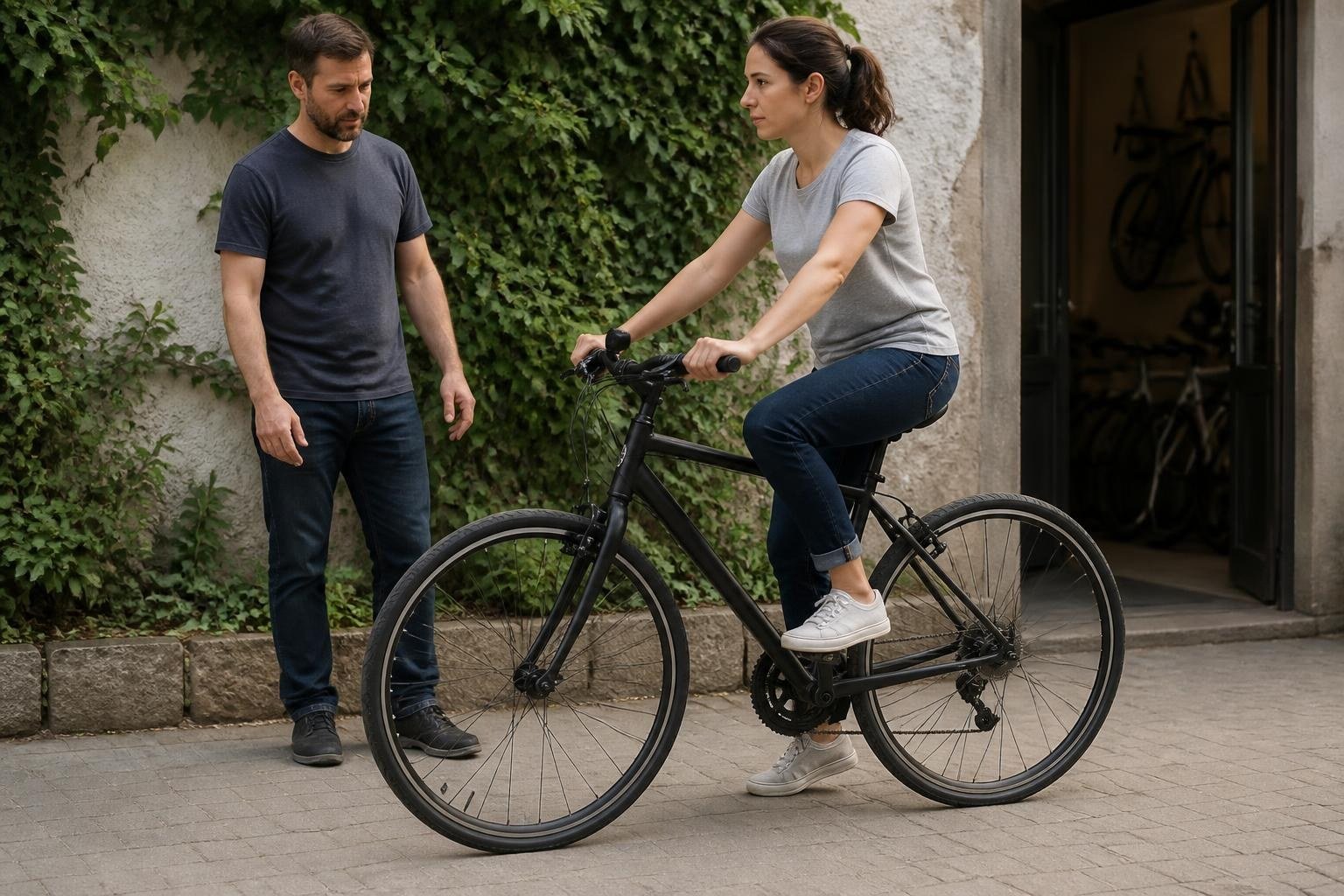
Check the frame size separately: choosing a bike based on your height affects handling and comfort, but height alone is not always enough. Manufacturers may use different sizing charts, so before buying, it is helpful to check the recommendations for the specific model and, if possible, take a short test ride. So, the answer to the question of how to choose a bike starts not with the brand, but with an honest assessment of your future routes, habits, and priorities.

In summary: how to choose a bike and get it right
To figure out how to choose a bike, match it to the actual conditions in which you will use it: your routes, how often you ride, and how you feel when seated on it. It is important to consider not only the price or appearance, but also whether the frame fits your height, how comfortable it is to handle, and whether the model is suited to the required load.
If you are figuring out how to choose a bike for a beginner, prioritize easy handling, a comfortable riding position, and components that are easy to maintain. For those wondering which bike to buy for the city, the key considerations should be convenience on everyday routes and suitability for the road surface. And a bike choice based on height should be confirmed not only with the manufacturer's chart, but also with a short test ride: the riding position should not cause unnecessary strain.
A well-chosen bike for everyday rides should make getting around easier, not require constant compromises. If you need a bike for active recreation, make sure its design suits your planned routes and fitness level. In any case, a two-wheeled vehicle should be not just attractive, but also safe, comfortable, and suitable for your needs.
Before buying, compare several models, check the frame size, and take a test ride. This will help you confidently decide how to choose the right bike for yourself and find a model you will want to ride regularly.



No comments yet. Be the first!
Leave a Comment