The Importance of Choosing a Motor for a Fishing Boat
Choosing a motor for a fishing boat is one of the most important stages of preparation for fishing. A properly selected motor will ensure efficiency, safety, and comfort while fishing from a boat. Every angler knows that for successful fishing, it is important not only to have a good spot but also the ability to get there quickly. Therefore, the motor engine for a fishing boat plays a key role in this process.
The market offers a wide range of fishing engines, which differ in power, fuel type, and design. The choice of a motor for a fishing boat depends on many factors, such as the type of boat, fishing conditions, and personal preferences of the angler. For example, lightweight electric motors are suitable for small boats, while larger fishing boats should opt for powerful gasoline motors.
Advantages of the Correct Motor Selection
The correct choice of motor can significantly enhance the fishing experience. Firstly, fishing motors should be reliable and efficient. They must provide speed that allows you to quickly reach your chosen location, as well as allow maneuvering in various weather conditions. Modern fishing engines are also characterized by low noise levels, which do not scare the fish and allow you to enjoy nature.
Economy and Environmental Friendliness
The choice of a motor for the boat also affects the economy of fishing. Modern fishing engines consume less fuel, which significantly reduces travel costs. Electric motors for fishing, in particular, are an environmentally friendly option, as they do not pollute water bodies. When choosing a motor, it is important to consider not only its power but also the efficiency of fuel use.
Safety on the Water
No less important is safety.
Choosing a motor engine for a fishing boat is a key step in ensuring comfortable and effective fishing. Modern electric motors offer low noise levels, allowing you not to scare the fish, as well as high performance and energy efficiency. Due to their ease of use and maintenance, electric motors become the ideal solution for those who value quality and reliability while fishing.
When choosing a motor engine for a fishing boat, it is important to pay attention to the engine's reliability, as this will directly affect your safety and comfort while fishing. A reliable engine will allow you to confidently cover long distances on the water without worrying about possible failures. Therefore, it is worth choosing models that have positive reviews regarding reliability and durability.
Conclusion
Thus, choosing a motor for a fishing boat is a critically important stage that will influence the quality of fishing. Fishing boats with engines that meet all requirements provide not only comfort but also safety. Taking all these factors into account, anglers can enjoy their hobby without worrying about technical problems and inconveniences on the water. With the right motor, fishing will become even more enjoyable and productive.
Types of Motors for Fishing Boats
When it comes to choosing a motor for a fishing boat, it is important to understand that there are several types of motors, each with its own advantages and disadvantages. In this section, we will discuss the main types of motors for fishing to help you make an informed choice.
1. Four-Stroke Motors
Four-stroke motors are popular among anglers due to their reliability and economy. These engines operate on the basis of four strokes, which allows them to be more efficient in fuel use.
- Advantages: low fuel consumption, lower noise level, less emissions of pollutants.
- Disadvantages: higher cost, some models are heavier.
2. Two-stroke engines
Two-stroke engines, although less popular, also have their fans among fishermen. They are simpler in design and usually lighter, making them ideal for small fishing boats.
- Advantages: lightness, ease of maintenance, high power at small volumes.
- Disadvantages: higher fuel consumption, higher noise level, as well as emissions of pollutants.
3. Electric motors
Electric motors are becoming increasingly popular among fishermen, especially in quiet waters. They provide silent operation and do not emit harmful pollutants, making them environmentally friendly.
- Advantages: eco-friendliness, low noise level, ease of maintenance.
- Disadvantages: limited range, need for batteries that need to be charged.
4. Hybrid motors
Hybrid motors combine the advantages of electric and gasoline engines. They allow fishermen to use electric power for quiet movements, and the gasoline engine for more power when needed.
- Advantages: versatility, potential fuel savings, reduced emissions.
- Disadvantages: more complex design, higher cost.
The choice of engine type for a fishing boat depends on many factors, including fishing style, body of water type, and budget. Understanding the features of each type of engine will help you find the optimal solution for your needs. Remember that the right choice of engine for a fishing boat will not only enhance comfort during fishing but also ensure safety on the water.
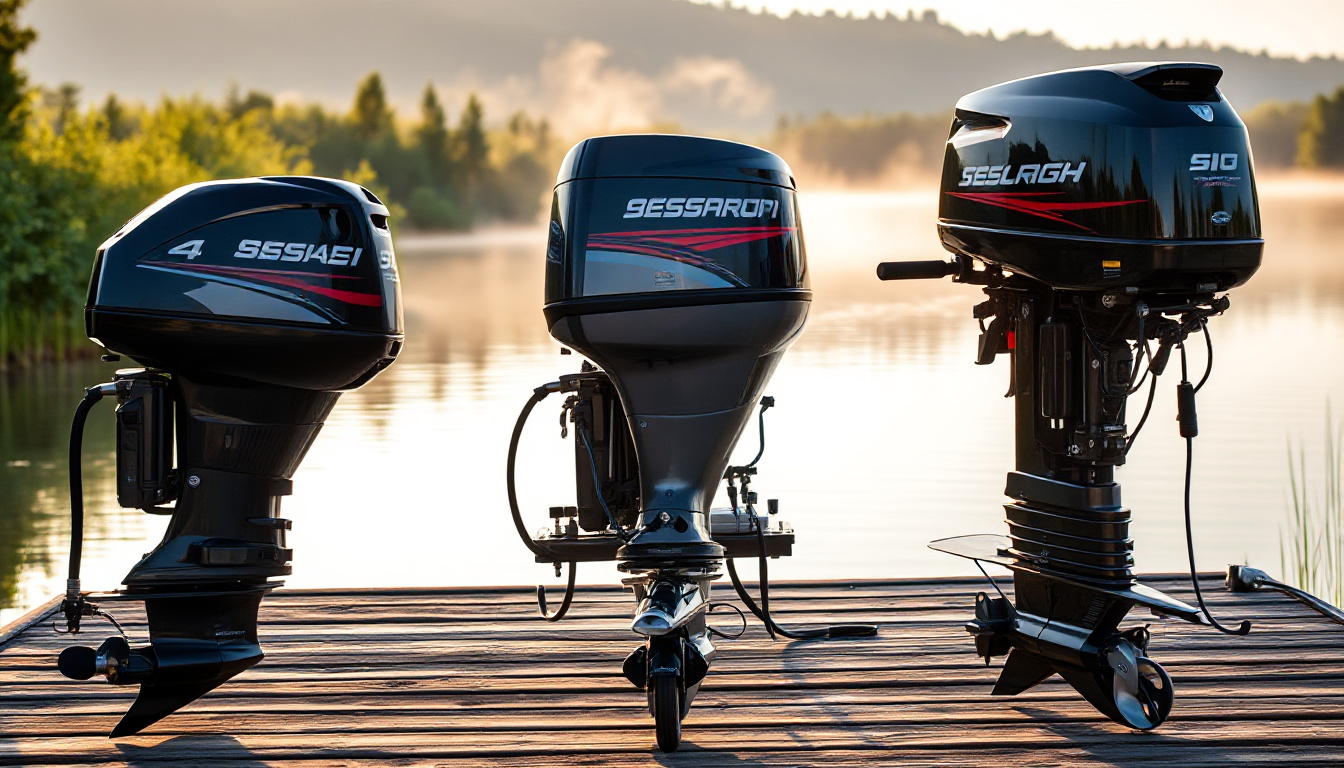
Criteria for choosing an engine for a fishing boat
Choosing an engine for a fishing boat is a complex process that requires consideration of many factors. To make the right choice, you should focus on a few key criteria. This will help you optimize your expenses and ensure comfortable fishing.
1. Engine power
Power is one of the most important criteria when choosing a fishing boat engine. It determines how fast your boat can move across the water. For small fishing boats, usually, an engine with a power of 2-5 hp is sufficient. However, for larger boats that can carry more cargo, you need to choose more powerful engines, from 10 hp and above.
2. Fuel type
The next important criterion is the type of fuel used by the boat engine. Most engines run on gasoline, but there are also diesel engines that can be more economical. The choice between them depends on your preferences and operating conditions. Gasoline engines are generally lighter and easier to use, while diesel engines are more powerful and economical.
3. Fuel consumption
Fuel consumption is another important factor to consider when reviewing engines for fishing boats. The lower the consumption, the more time you can spend on the water. For example, engines with direct fuel injection technology can have significantly lower consumption, making them more cost-effective for long fishing expeditions.
4. Owner's Experience and Skills
Another important aspect is the experience and skills of the angler. If you are a beginner in boat fishing, a simpler motor with low power may be suitable for you. More experienced anglers can choose more complex and powerful motors that require certain skills to operate.
5. Service and Maintenance
Motor maintenance is another important aspect to consider. It is necessary to consider how easy it is to find spare parts and service for the engine you have chosen. Well-known brands usually have a wide network of service centers, which simplifies maintenance and repairs.
6. Cost
The price of fishing engines can vary significantly depending on power, brand, and technology used. It is important to determine your budget in advance and try to find the optimal price-to-quality ratio. You should never skimp on quality, as it can affect your safety while fishing.
7. Additional Features
Modern fishing motors can have many additional features, such as electronic control systems, automatic cooling systems, or even GPS navigation. These features can significantly ease the fishing process and enhance comfort.
Overall, choosing a motor for a fishing boat is an important step that requires careful consideration. Each of the listed criteria will help make the right choice, ensuring you have an enjoyable experience while fishing from a boat.
The Best Motors for Fishing: Overview
An overview of motors for fishing boats will help you choose the best option that meets your needs. In this section, we will look at several popular models suitable for fishing, their features, and advantages.
1. Mercury 9.9 HP Motor
This motor is perfect for small fishing boats. With a power of 9.9 horsepower, it provides sufficient speed and maneuverability. Mercury is known for its reliability and ease of maintenance.
- Lightweight and compact design.
- Low fuel consumption.
- Convenient starting system.
2. Yamaha F20
The Yamaha F20 motor is another great choice for fishing. Its power of 20 horsepower allows for high speeds even on heavy boats. This motor is characterized by high manufacturing quality and corrosion resistance.
- Powerful and economical engine.
- Automatic cooling management system.
- Reliable fuel system.
3. Honda BF10
The Honda BF10 motor is another popular choice among anglers. This 10-horsepower engine is distinguished by low noise and vibration levels, making it ideal for calm fishing on a boat.
- Eco-friendly technology.
- Easy to use.
- Easy starting system.
4. Suzuki DF15A
If you are looking for a powerful motor for your boat, Suzuki DF15A is the right choice. With a power of 15 horsepower, it offers excellent performance and fuel efficiency, making it ideal for long fishing expeditions.
- Torque control system for optimized performance.
- Compact and lightweight design.
- Available spare parts and service.
5. Tohatsu MFS9.8D
The motor Tohatsu MFS9.8D is quite popular among anglers due to its reliability. With a power of 9.8 horsepower, it is suitable for mid-sized fishing boats. This motor is noted for its ease of use and maintenance.
- High performance with low fuel consumption.
- Convenient tilt angle adjustment mechanism.
- Affordable price with excellent quality.
Choosing the right motor for a fishing boat is very important. The review of motors for fishing boats that we presented will help you determine which option best meets your requirements. Don't forget to consider the type of fishing and operating conditions when choosing a motor. Fishing from a boat can become an unforgettable experience if you choose the right motor.
Comparison of Popular Motor Models
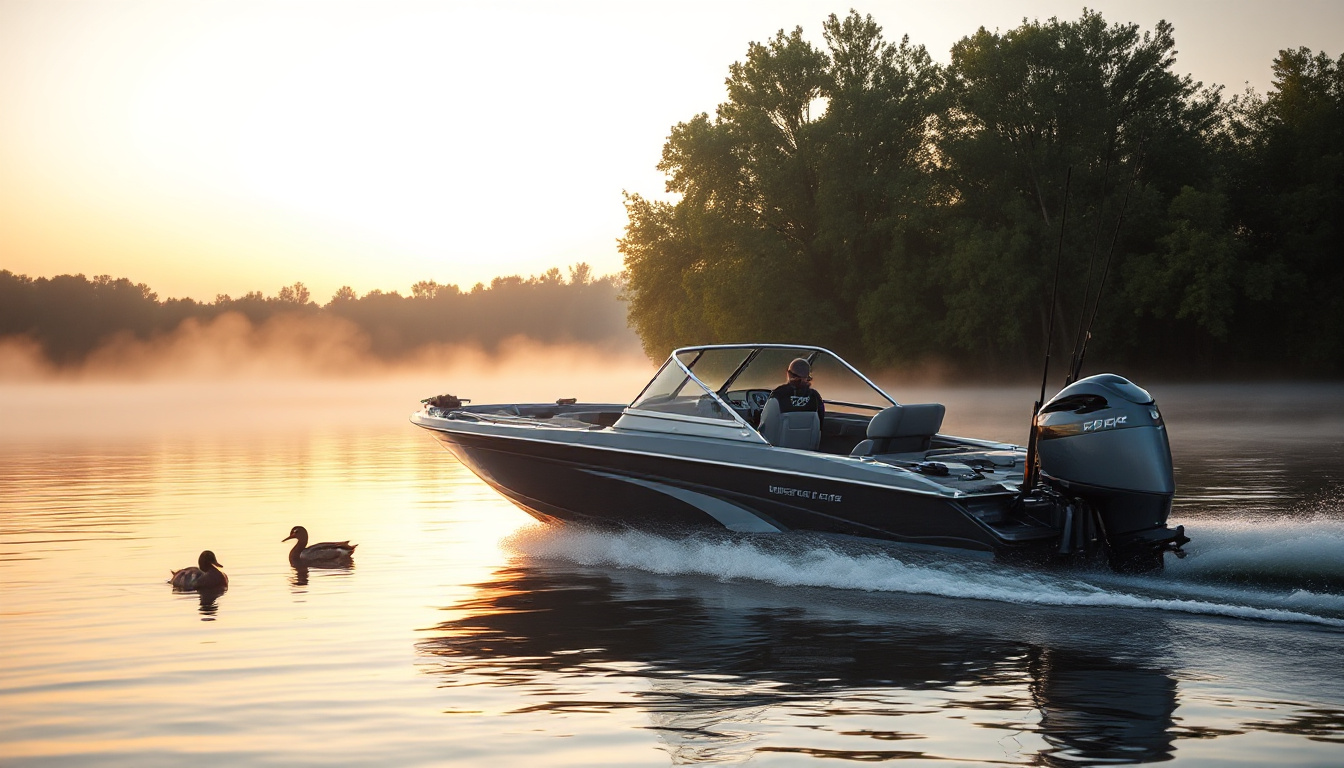
When it comes to a motor engine for a fishing boat, there are many models that can meet different needs of anglers. Choosing a motor for a fishing boat can be complicated by the variety of specifications, price categories, and reviews. In this section, we will review several popular models, their features, advantages, and disadvantages to help you make an informed choice.
1. Model A: Yamaha F2.5
Yamaha F2.5 is a lightweight and compact motor for boats, ideally suited for small fishing boats. It has a power of 2.5 hp and runs on gasoline. Here are some key specifications:
- Advantages: Lightweight, easy to operate, fuel-efficient.
- Disadvantages: Limited power for larger boats.
2. Model B: Mercury 5HP
Mercury 5HP is a more powerful option suitable for mid-sized fishing boats. The motor has a power of 5 hp and is noted for its good performance. Main specifications:
- Advantages: High reliability, good speed, suitable for various conditions.
- Disadvantages: Slightly heavier than other models.
3. Model C: Honda BF10
Honda BF10 is one of the most popular fishing engines. Its power is 10 hp, making it ideal for use on large fishing boats. Main advantages:
- Advantages: High power, economical fuel consumption, quiet engine.
- Disadvantages: Higher price than most competitors.
4. Model D: Suzuki DF15A
Suzuki DF15A is a powerful and efficient motor for fishing with a power of 15 hp. It provides excellent speed and performance. Main specifications:
- Advantages: High speed, economical fuel consumption, easy handling.
- Disadvantages: May be too powerful for small boats.
Conclusion
When choosing a motor engine for a fishing boat, it is important to weigh all the advantages and disadvantages of popular models. Your fishing experience on a boat will be maximally comfortable and productive only with the right motor choice. Remember that fishing engines should meet your needs, as well as the type of boat and conditions in which you plan to fish. Considering the presented models, you will be able to find the optimal option for your fishing adventures.
Advantages and disadvantages of different types of engines
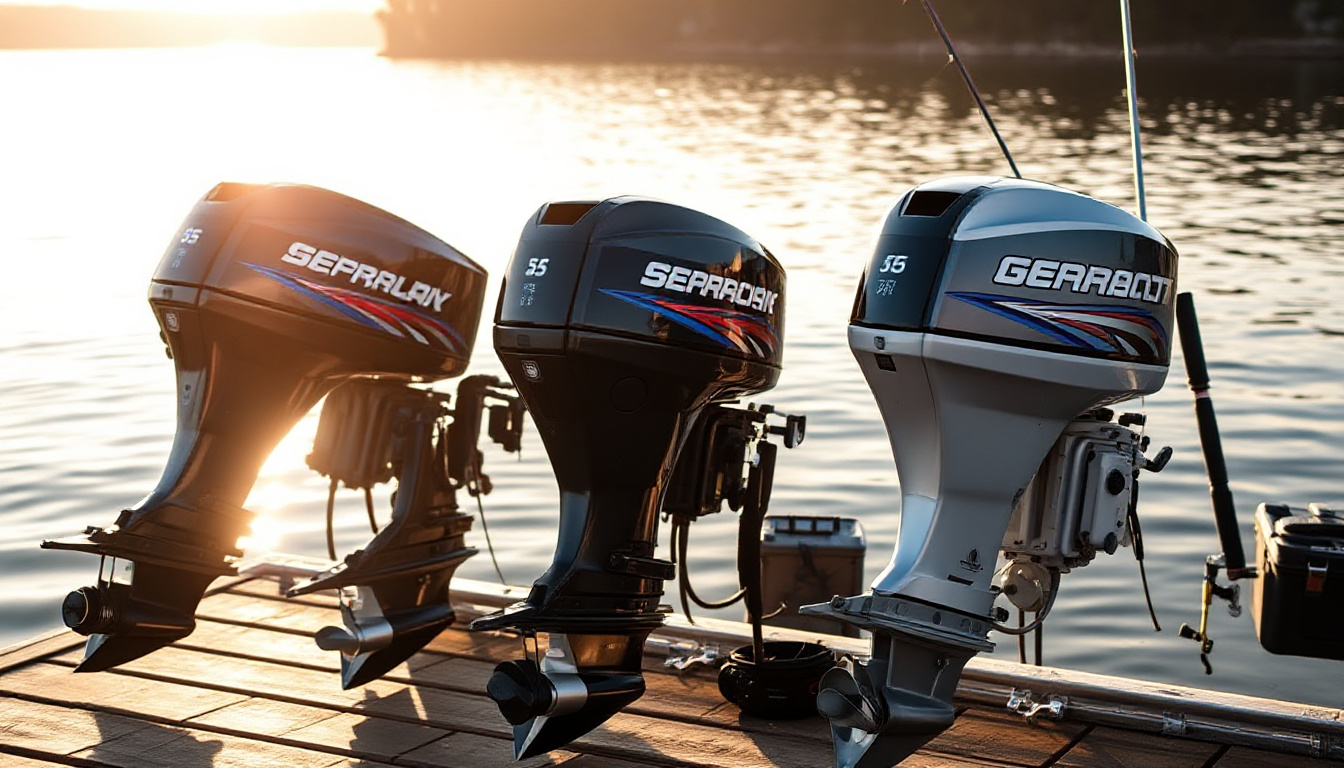
The choice of a motor engine for a fishing boat depends not only on technical characteristics but also on the advantages and disadvantages of various types of engines. Understanding these aspects will help you make an informed choice that will affect the quality of fishing. Each type of motor has its unique features that should be considered when choosing.
Gasoline motors
Gasoline motors for fishing boats are among the most popular options. They are distinguished by power and speed, making them ideal for large bodies of water.
- Advantages:
- High power, allowing for quick movement on the water.
- A wide range of models with different characteristics.
- Ease of maintenance and repair.
- Disadvantages:
- High noise level during operation.
- Emission of harmful gases into the environment.
- High fuel consumption, which can increase fishing costs.
Electric motors
Electric motors for fishing are becoming increasingly popular, especially among those who prefer quiet fishing on small bodies of water.
- Advantages:
- Low noise level, which does not scare away fish.
- Eco-friendliness — no emissions into the air and water.
- Lightweight, making transportation and installation easier.
- Disadvantages:
- Limited power, which may be insufficient for large boats.
- Limited operating time without recharging.
- The need for a battery, which requires additional maintenance.
Diesel motors
Diesel motors for boats are less common, but they can be an excellent choice for fishing on large boats that require significant power.
- Advantages:
- High fuel efficiency and low fuel consumption.
- High reliability and long service life.
- Resistance to various weather conditions.
- Disadvantages:
- High cost of purchase and maintenance.
- Heavy weight, which can affect the maneuverability of the boat.
- Emission of harmful substances, although less than gasoline motors.
When choosing a motor engine for a fishing boat, it is important to consider not only its advantages but also its disadvantages. Determine your needs and fishing conditions to choose the optimal option. The choice of motor for the boat will affect your fishing, so make it thoughtfully.
Conclusion
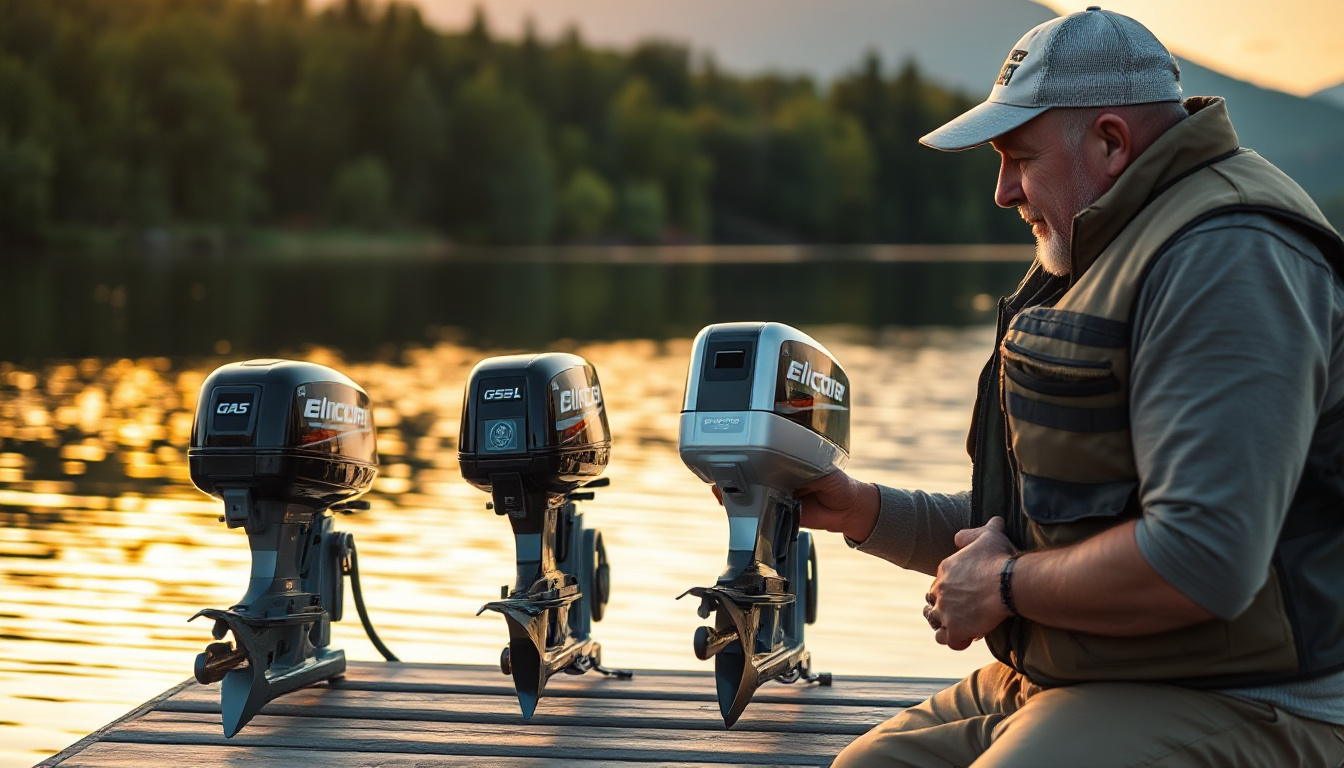
Choosing an outboard motor for a fishing boat is a crucial step that affects the success of your fishing. A properly selected motor not only ensures high efficiency but also guarantees comfort and safety while fishing from a boat. It is important to consider all criteria, such as the type of engine, its power, fuel consumption, as well as your personal preferences.
Key aspects of motor selection
When choosing a motor for your boat, you need to pay attention to the characteristics that are suitable for your fishing. Will you be fishing in a large body of water or a small river? What is the weight of your fishing boat? All these factors influence your choice.
Reliability and maintenance
Equally important is the issue of the reliability of fishing motors. When selecting a motor, pay attention to reviews from other users and the manufacturer's reputation. Regular maintenance of your engine will help extend its service life and avoid unexpected breakdowns during fishing.
Environmental aspects
Today, more and more anglers are paying attention to environmental aspects when choosing fishing motors. Modern technologies allow for the creation of fishing boats with engines that have low emissions and consume less fuel. This not only helps preserve the environment but also saves you money.
Final thoughts
In conclusion, choosing an outboard motor for a fishing boat is a process that requires attention and careful analysis. It is important to weigh all the pros and cons, consider your needs, and the conditions of fishing. By finding the perfect motor, you will be able to enjoy fishing from a boat without unnecessary worries.
Don't put off your choice for later! Analyze all options, familiarize yourself with the reviews of motors for fishing boats, and make your choice today. Good luck with your catch!
Frequently Asked Questions
What motor is suitable for a small fishing boat?
For a small fishing boat, it is recommended to use lightweight electric motors. They provide sufficient power and maneuverability, and are also environmentally friendly.
What are the advantages of a gasoline motor for a fishing boat?
Gasoline motors for fishing boats usually have high power, allowing for quick movement over long distances. They can also be more efficient in strong wind and wave conditions.
Why is it important to choose the right motor engine for a fishing boat?
Choosing the right motor engine for a fishing boat ensures efficiency, safety, and comfort while fishing. It will help you reach your desired fishing spots faster.
How often should a motor for a fishing boat be serviced?
Regular maintenance of the motor for a fishing boat is necessary to ensure safety on the water. It is recommended to perform checks and maintenance before each seasonal use.
What modern technologies are used in fishing motors?
Modern fishing motors are equipped with technologies that reduce noise levels and fuel consumption. This makes them more economical and environmentally friendly.
What factors influence the choice of a motor for a fishing boat?
The choice of a motor for a fishing boat depends on the type of boat, fishing conditions, as well as the personal preferences of the fisherman. It is important to consider power, fuel type, and efficiency.
Are electric motors for fishing economical?
Yes, electric motors for fishing are economical as they consume less energy and do not pollute water bodies. This makes them an ideal choice for environmentally conscious fishermen.
What should you pay attention to when choosing a motor for a fishing boat?
When choosing a motor for a fishing boat, you should pay attention to its power, fuel type, as well as reliability and reviews from other fishermen. This will help you find the optimal option.
Is training necessary for using a motor engine on a boat?
While specialized training is not always mandatory, knowledge of safety basics and operating rules for the motor engine of a fishing boat is very important to prevent accidents.
What fishing engines are the most popular on the market?
There is a wide range of fishing engines available on the market, but the most popular models are gasoline motors from well-known brands, as well as electric motors that are gaining popularity due to their environmental friendliness.



No comments yet. Be the first!
Leave a Comment